Understanding Property Ownership in Bali
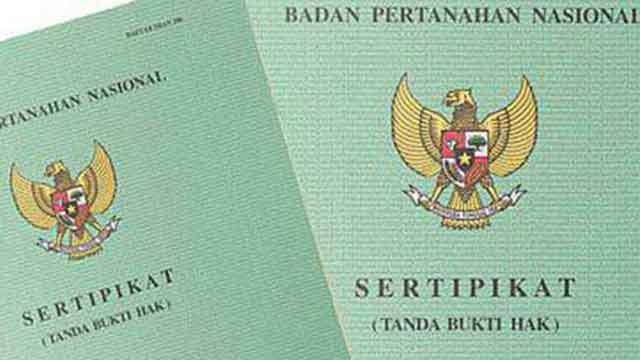
If you are a Foreign citizen considering purchasing property in Bali, the most important thing to understand is that Indonesia does not allow foreign nationals to own land under Hak Milik (SHM / Outright Ownership).
However, several legal structures may be available to foreign buyers. The appropriate structure depends on whether the property is intended for personal use, investment, or business.
For a Foreign citizen married to an Indonesian citizen, there is also an additional consideration: the marital-property arrangement between the spouses.
Hak Milik or Outright Ownership
SHM, or Hak Milik, is the strongest form of land ownership in Indonesia.
Under Indonesian Agrarian Law, Hak Milik can only be held by Indonesian citizens (WNI). A Foreign citizen cannot hold an SHM title in their own name.
SHM is therefore suitable for Indonesian citizens.
For example, the Indonesian spouse may purchase a villa and have the land registered under their name with an SHM certificate.
The Foreign spouse cannot simply be added as a co-owner of the SHM because they are a foreign citizen.
For a mixed marriage, there is an important additional consideration. An Indonesian citizen married to a foreign citizen can still hold eligible land rights, but the property must be structured so that the land is not considered joint marital property.
This is where a marital agreement, prenuptial agreement, or postnuptial agreement separating the spouses’ assets becomes important.
Indonesian regulations provide that an Indonesian citizen married to a foreigner may hold land rights as an Indonesian citizen, provided the land is not joint marital property and this is supported by an appropriate separation-of-assets agreement made by notarial deed.
In simple terms, the Indonesian spouse may potentially hold SHM, while the Foreign spouse cannot personally hold the SHM.
If the Indonesian spouse wants to acquire and hold SHM while married to a foreign national, the marital-property arrangement should therefore be properly established and reviewed before the transaction.
If the couple already has a valid prenuptial agreement that establishes separation of assets, the Indonesian spouse may be able to acquire and hold eligible land in their own name, subject to review by the notary or PPAT handling the transaction.
If the couple does not have a prenuptial agreement, this does not necessarily mean that purchasing property is impossible.
Following Constitutional Court Decision No. 69/PUU-XIII/2015, Indonesian law allows a marital agreement to be made during the marriage, not only before marriage.
Therefore, a couple who married without a prenup should speak with an Indonesian notary about preparing an appropriate postnuptial marital agreement or perjanjian perkawinan before proceeding with a property acquisition.
The exact wording and legal effect of the agreement should be confirmed by the notary or Indonesian property lawyer handling the transaction.
Hak Guna Bangunan or Right to Build
HGB, or Hak Guna Bangunan, means Right to Build.
It gives the holder the right to construct and own buildings on land for a defined period. It is not the same as Hak Milik or Freehold.
HGB may be relevant to Indonesian companies and properly structured investment entities. However, establishing a PT PMA does not automatically mean that the company qualifies to hold HGB.
Eligibility must be assessed based on the company’s approved business classification, investment approvals, business licenses, zoning and spatial-planning requirements, capitalization, intended use of the property, the type and status of the underlying land, and the regulations in force at the time of the transaction. Additional sector-specific or regional requirements may also apply.
For example, an American investor may establish an Indonesian company or PT PMA, confirm that the company and proposed activity qualify for the relevant land right, obtain the required approvals and licenses, and then have the company acquire eligible HGB property. In this structure, the company, rather than the American individual personally, holds the relevant land right.
A PT PMA structure should therefore be evaluated as part of a genuine and properly licensed business or investment activity. It should not be assumed to be a general-purpose vehicle for acquiring any property, and it should not be used as a nominee arrangement to disguise foreign ownership of SHM.
HGB is commonly considered when the property is intended as an investment or commercial or business asset rather than simply a personal holiday home.
Before proceeding, the company’s eligibility, licensing, capitalization, zoning, land status, intended use, and compliance with current regulations should be reviewed by the relevant Indonesian notary, PPAT, and legal advisers.
Leasehold
Another common structure in Bali is Leasehold.
A leasehold is fundamentally different from SHM and HGB because you are not purchasing the underlying land.
Instead, you enter into a legally documented agreement giving you the right to use the property for a specified period.
For example, under a 25-year lease, you receive contractual rights to use the property for 25 years while the underlying land remains owned by the Indonesian landowner.
Leasehold can therefore be attractive to foreign buyers who want to use or operate a villa without establishing a more complicated ownership structure.
However, the quality of the lease agreement is critical. The agreement should clearly address the lease period, payment terms, extension and renewal rights, property use, construction and renovation rights, transfer and assignment rights, what happens if the property is sold, what happens upon the death of either party, dispute resolution, taxes and expenses, and the condition of the property at the end of the lease.
Choosing the Right Structure
Property ownership in Indonesia is more complicated than simply choosing between “Freehold” and “Leasehold.”
The appropriate structure can depend on:
• Nationality
• Marital status
• Purpose of purchase
• Property type
• Zoning
• Intended use
• Land status
• Ownership structure
• Applicable land rights
• Company eligibility and licensing, where applicable
For a foreign citizen married to an Indonesian citizen, the key distinction is that the Indonesian spouse may potentially hold SHM, but this does not mean that the American spouse jointly owns the SHM property.
Likewise, establishing a PT PMA does not automatically give a foreign investor the right to acquire any property in Bali.
Each structure has different legal, financial, and practical implications.
Before You Purchase
Before making any binding payment or signing a purchase agreement, we strongly recommend having the proposed ownership structure and transaction documents reviewed by an Indonesian notary or PPAT.
This is particularly important for mixed-marriage SHM purchases, PT PMA structures, HGB transactions, and long-term leasehold agreements.
Need Help Finding the Right Structure?
At Bhagawan Property, we help international buyers navigate Bali’s property market and understand the practical differences between SHM, HGB, PT PMA, and Leasehold structures.
If you are a Foreign citizen, married to an Indonesian citizen, or simply considering investing in Bali, contact Bhagawan Property for a consultation and to discuss which property structure may be appropriate for your circumstances.